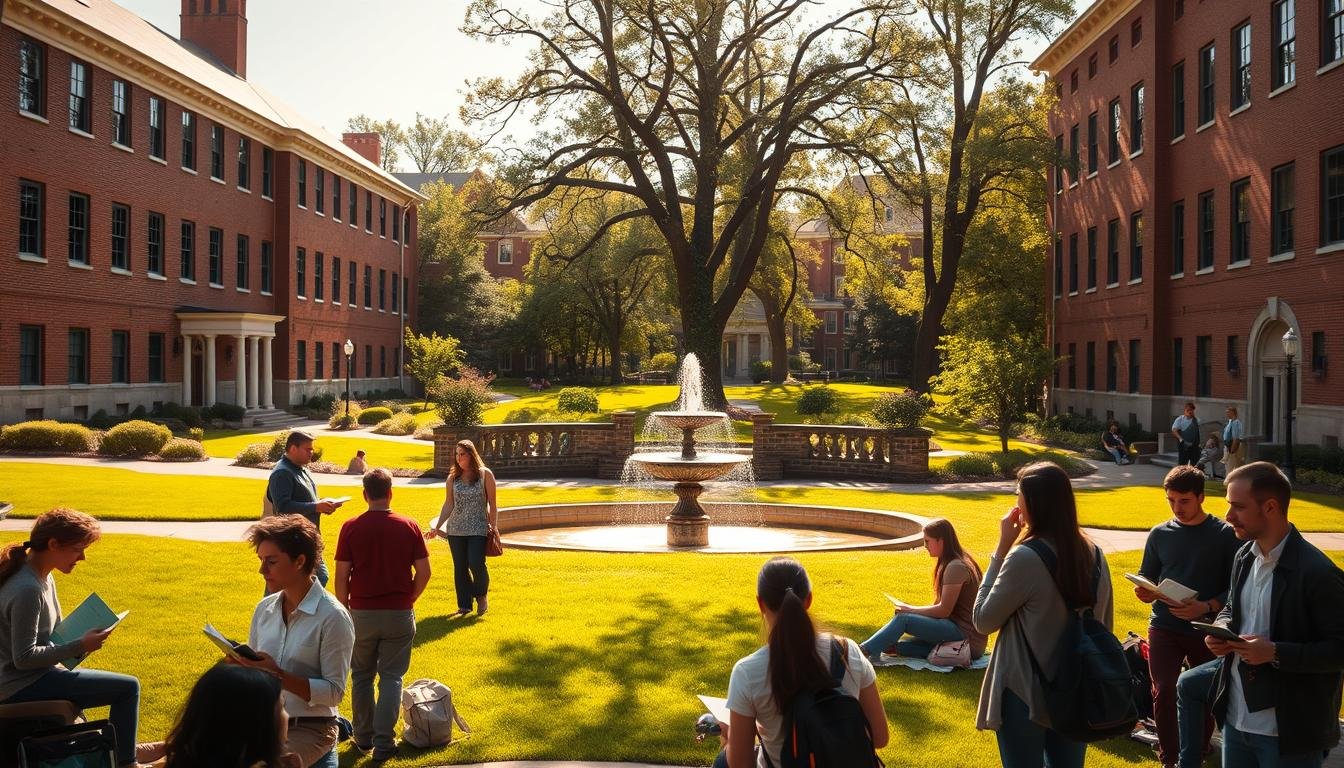
In today’s fast-paced, technology-driven world, the value of a liberal arts education often gets overlooked. However, this type of education has been the cornerstone of academic excellence for centuries, fostering critical thinking, creativity, and well-rounded individuals.
A liberal arts education is designed to provide students with a broad-based education, exploring various disciplines such as literature, history, philosophy, and the arts. This approach helps students develop a nuanced understanding of the world and its complexities.
By embracing a liberal arts approach, individuals can cultivate valuable skills that are highly sought after by employers, including problem-solving, effective communication, and collaboration.
Key Takeaways
- A liberal arts education fosters critical thinking and creativity.
- It provides a broad-based education, exploring various disciplines.
- Liberal arts graduates develop valuable skills highly sought after by employers.
- This type of education helps individuals become well-rounded and nuanced thinkers.
- A liberal arts education is essential for academic excellence.
What Is a “Liberal Arts” Education, and Why Is It Valuable
At its core, a liberal arts education is designed to cultivate critical thinking, creativity, and effective communication. This educational approach has been valued for centuries, and its importance extends beyond the classroom.
The Historical Roots and Modern Definition
The concept of liberal arts education originated in ancient Greece and Rome, where it was considered essential for the development of free citizens. The term “liberal arts” refers to the subjects considered necessary for a free person to master, as opposed to vocational or technical skills. Today, a liberal arts education encompasses a broad range of disciplines, including humanities, social sciences, natural sciences, and arts.
The modern definition of liberal arts education emphasizes the development of transferable skills, such as problem-solving, analytical thinking, and collaboration. These skills are highly valued by employers across various industries, making liberal arts graduates versatile and competitive in the job market.
Core Disciplines and Curriculum Structure
A liberal arts education typically includes a diverse curriculum that exposes students to various disciplines. The core disciplines often encompass:
- Languages and literature
- History and cultural studies
- Philosophy and ethics
- Social sciences, including psychology and sociology
- Natural sciences, such as biology, chemistry, and physics
- Mathematics
- Arts, including visual arts, music, and theater
This broad-based education is designed to foster a deep understanding of the world and its complexities, preparing students for a wide range of career paths.
Liberal Arts Colleges vs. Traditional Universities
Liberal arts colleges differ from traditional universities in their focus on undergraduate education and a more personalized learning experience. Liberal arts colleges typically offer smaller class sizes, encouraging close interaction between students and faculty. In contrast, traditional universities often have larger student bodies and a broader range of graduate programs.
The benefits of liberal arts colleges include a more intimate academic environment, where students can engage in meaningful discussions and receive mentorship from experienced faculty. This setting allows students to explore their interests in depth and develop a strong foundation for their future careers.
The Practical Benefits of Liberal Arts Training
One of the most significant advantages of a liberal arts education is its focus on cultivating skills that are transferable across different industries and roles. The liberal arts curriculum is designed to foster a broad range of competencies that are highly valued by employers.
Developing Transferable Skills for Any Career
Liberal arts students develop a versatile set of skills through their studies, including critical thinking, problem-solving, and effective communication. These liberal arts skills are not limited to specific careers but are applicable across various professional paths.
For instance, the ability to analyze complex information, think critically, and articulate thoughts clearly is invaluable in today’s fast-paced work environments. Employers across different sectors look for individuals who can adapt, think creatively, and contribute to solving complex problems.
Critical Thinking and Problem-Solving Abilities
A key component of liberal arts training is the development of critical thinking and problem-solving abilities. Through the study of diverse subjects, students learn to approach problems from multiple angles, analyze data, and develop well-reasoned conclusions.
This skillset is crucial in navigating the complexities of modern careers, where the ability to think critically and solve problems creatively is highly prized. Liberal arts careers often benefit from this foundation, as individuals are equipped to handle a wide range of challenges.
Communication and Cross-Cultural Competence
Effective communication is another critical skill fostered by liberal arts education. Students learn to express their ideas clearly and persuasively, both in writing and verbally. Moreover, the exposure to a broad curriculum often includes studies in languages, cultures, and histories, enhancing cross-cultural competence.
In a globalized economy, being able to communicate across cultural boundaries is a significant advantage. Liberal arts skills such as these enable professionals to work effectively in diverse teams and navigate international business environments.
Adaptability in a Changing Job Market
The job market is constantly evolving, with new technologies and economic shifts creating new opportunities and challenges. A liberal arts education prepares individuals for this dynamic landscape by teaching them how to learn, adapt, and grow.
By focusing on developing a broad skill set, liberal arts training enables graduates to pivot into new areas as their careers progress. This adaptability is a key benefit of liberal arts careers, allowing individuals to thrive in a changing job market.
Conclusion
A liberal arts education is more than just a degree; it’s a foundation for a lifetime of learning, growth, and exploration. By fostering critical thinking, creativity, and effective communication, liberal arts training prepares individuals for a wide range of careers and personal pursuits.
The benefits of a liberal arts education are clear: it develops transferable skills, enhances problem-solving abilities, and promotes cross-cultural competence. As the job market continues to evolve, the adaptability and versatility that liberal arts education provides are more valuable than ever.
In embracing the value of liberal arts education, individuals can unlock their full potential, navigate the complexities of a rapidly changing world, and make meaningful contributions to their communities. Whether through the study of literature, history, or the arts, a liberal arts education provides a rich and nuanced understanding of the world and our place within it.
FAQ
What is a liberal arts education, and how does it differ from other types of education?
A liberal arts education is an educational approach that focuses on a broad-based curriculum, encompassing subjects such as literature, history, philosophy, and the arts, as well as social sciences and natural sciences. It differs from other types of education in its emphasis on developing well-rounded individuals with a wide range of skills and knowledge.
What are the benefits of attending a liberal arts college?
Attending a liberal arts college can provide students with a more personalized education, smaller class sizes, and a diverse range of academic programs. Liberal arts colleges also foster a strong sense of community and encourage students to explore various interests and passions.
Are liberal arts graduates employable in today’s job market?
Yes, liberal arts graduates are highly employable in today’s job market. The skills they develop, such as critical thinking, problem-solving, and communication, are highly valued by employers across various industries. Many liberal arts graduates go on to pursue successful careers in fields such as business, law, medicine, and education.
What kind of skills do liberal arts students develop?
Liberal arts students develop a range of skills, including critical thinking, problem-solving, writing, and communication. They also learn to analyze complex information, think creatively, and approach problems from multiple perspectives.
How does a liberal arts education prepare students for a changing job market?
A liberal arts education prepares students for a changing job market by teaching them to be adaptable, flexible, and open to new experiences. Liberal arts students learn to navigate complex situations, think on their feet, and develop innovative solutions to problems.
Can liberal arts graduates pursue careers in STEM fields?
Yes, liberal arts graduates can pursue careers in STEM fields. While they may not have the same technical training as STEM majors, they bring a unique perspective and skillset to the field. Many liberal arts graduates go on to pursue successful careers in STEM fields, particularly in areas that require strong critical thinking and problem-solving skills.